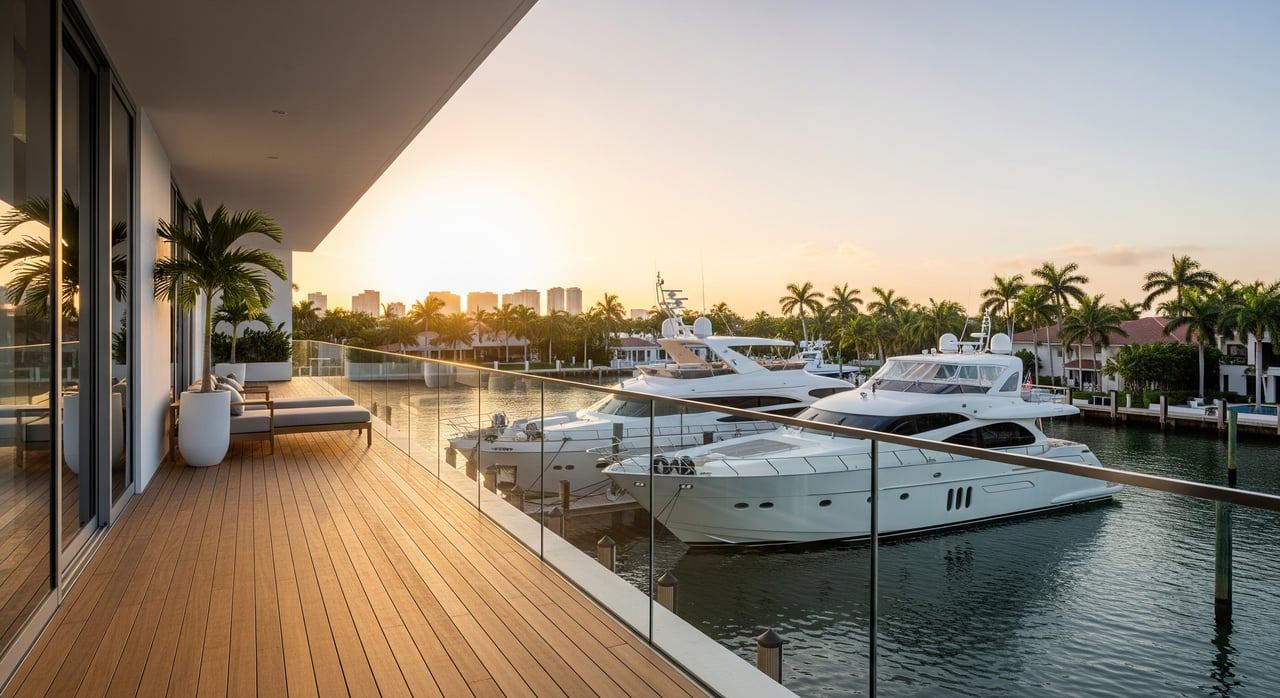
Do you picture stepping out of your condo and casting off for a smooth run to the Atlantic? In Aventura, that dream is real, but not every marina fits every boat or every lifestyle. You want easy docking, clear bridge passages, predictable depths, and HOA rules that support how you plan to use your slip.
This guide shows you how to evaluate Aventura condos with marina access using the same criteria experienced boaters use. You will learn how to match your boat to a slip, estimate run times to the inlet, decode HOA and fee structures, and vet services, hurricane plans, and permits. A quick checklist at the end helps you narrow choices fast.
Let’s dive in.
Fit first: slip size and layout
Your boat must physically fit the slip with room to maneuver. Start by comparing your boat’s LOA, beam, draft, and air‑draft to the slip’s measured specs.
- Length: aim for your boat’s LOA plus 2 to 3 feet of clearance. Confirm usable length, not only the advertised number.
- Beam: allow about 2 feet of space on each side. That means your boat’s beam plus roughly 4 feet total between pilings.
- Layout: check whether docking is side‑tie or between pilings, if docks are fixed or floating, and how wind and current hit the fairway. These details affect docking comfort and insurance.
Ask for a current slip spec sheet and dock map. Measure your boat including davits, platforms, and antennas before you compare.
Depth, tides, and shoaling
Depth is more than a number on a brochure. You need the depth at Mean Low Water at your slip and on the approach channel. Keep at least 2 feet of water under your keel at MLW, and more if the area is known to shoal.
- Verify soundings on the NOAA Nautical Charts viewer.
- Check local tide ranges and predicted extremes with NOAA Tides & Currents.
- Ask the marina for recent depth soundings and dredging history.
If possible, visit at low tide to see real‑world conditions. Ask neighbors or dock staff how often the approach silts in and whether dredging is scheduled.
Bridges, inlet routes, and run time
From Aventura, most routes lead to Baker/Haulover Inlet to the south or Government Cut farther south, depending on your location and traffic. Your run time depends on nautical distance, your cruising speed, speed‑restricted ICW zones, and bridge operations.
- Measure distance on the NOAA chart viewer and compute time as distance in NM divided by speed in knots. For example, 6 NM at 12 knots is about 30 minutes.
- Confirm bridge clearances and operating information on the U.S. Coast Guard Navigation Center. Compare your boat’s highest fixed point to published vertical clearance with a safety margin.
If a fixed bridge is near your route, air‑draft can be the deciding factor. Movable bridges can add wait time, so factor that into your day‑boating plans.
Ownership, HOA rules, and transferability
The legal status of the slip can be the biggest non‑technical barrier. Clarify whether slips are deeded, leased, or licensed by the association, and what that means for transfer and use.
- Deeded slips generally transfer like real property and can be tied to a unit. Leases or licenses may have expiration dates, transfer limits, or waiting lists.
- Review rental and guest policies, minimum insurance limits, and any indemnity clauses in the marina rules.
- Ask for past and potential special assessments, especially for docks, bulkheads, or dredging.
Use the Florida Statutes Chapter 718 as your reference point for condominium governance, and request recorded documents, rules, and recent board minutes that address the marina.
Fees, services, and daily convenience
Beyond the slip, services shape your everyday boating life and costs. Confirm what is available and what it costs.
- Fuel and pump‑out: on‑site access saves time. Know fuel grades and pump‑out locations and fees.
- Shore power: verify amperage and voltage at your pedestal and whether it is dedicated to your slip.
- Haul‑out: ask about travel‑lift capacity, scheduling, and yard relationships.
- Security: look for gated access, lighting, and CCTV.
Request the full fee schedule, including slip or HOA marina fees, electricity, guest docking, and any dock transfer or administrative fees.
Hurricane readiness and risk management
In South Florida, hurricane procedures are not optional. A clear plan protects both your boat and the marina infrastructure.
- Ask for the marina hurricane plan, including storm line requirements, haul‑out options, and timelines.
- Review insurance requirements for owners and for the association.
- Look for history of storm damage, repair cycles, and resiliency upgrades.
For practical preparedness guidance, review trusted resources like BoatUS. Prioritizing marinas with clear plans and capacity can reduce exposure and insurance friction.
Environmental and permitting realities
Some marinas sit near seagrass or in areas that require permits for dredging and dock work. These constraints can limit changes and add costs.
- Check permitting and dredging records with the U.S. Army Corps of Engineers and the Florida Department of Environmental Protection.
- For property records and local context, consult the Miami‑Dade GIS portal.
If a community needs dredging to maintain depths, confirm whether reserves are funded and if special assessments are likely.
Quick Aventura marina condo checklist
Use this streamlined checklist to narrow your shortlist before you tour. If any must‑have item is a hard no, move on.
Physical fit
- Slip usable length vs your boat LOA: fit with 2 to 3 feet to spare?
- Clear width between pilings vs your beam: beam plus about 4 feet?
- Published depth at MLW vs your draft: at least 2 feet under‑keel?
Access and run time
- Nautical miles to your preferred inlet and estimated run time at your typical speed.
- Any fixed bridges below your safe air‑draft margin? Movable bridge schedules acceptable?
Ownership and rules
- Deeded slip or HOA lease/license, with clear transfer terms in writing.
- Rental, guest, and insurance rules align with your plans.
Services and operations
- On‑site fuel and pump‑out, shore power amperage confirmed, guest slips as needed.
- Haul‑out capacity and seasonal hurricane procedures documented.
Financials
- Full fee schedule received, including electricity and transfer fees.
- Reserve funding for docks and dredging; any history of special assessments.
Risk and compliance
- Recent soundings provided; shoaling history and dredging permits verified.
- Security, lighting, and access controls meet your standards.
To verify details, measure routes and soundings with NOAA charts, check tides with NOAA Tides & Currents, and confirm bridge data on the USCG Navigation Center.
How we help you compare Aventura options
As a boutique, founder‑led firm, we guide you through a clear, measured process tailored to your boating and lifestyle goals. We request the full marina document set up front, validate slip fit and access using charts and bridge data, and coordinate with management to obtain recent depth soundings.
We also review HOA rules, transfer terms, fee schedules, and reserve studies so you understand the true cost and flexibility of ownership. For storm planning, we confirm hurricane procedures and local haul‑out options. If you are abroad or buying a second home, our integrated management services can help you operate the property confidently after closing.
When you are ready to explore Aventura condos with marina access, connect with Urdapilleta Real Estate to schedule a private consultation.
FAQs
What should a first‑time Aventura buyer check to ensure a boat will fit a condo slip?
- Measure your boat’s LOA, beam, draft, and air‑draft, then compare to a slip spec sheet and MLW depth with at least 2 feet of under‑keel clearance and safe bridge clearance.
How do I estimate run time from an Aventura marina to the ocean inlet?
- Use the NOAA chart viewer to measure nautical miles, divide by your cruising speed in knots, and add time for ICW speed zones and any movable bridge waits.
Which documents matter most when evaluating a condo with a marina in Florida?
- Request the slip deed or lease, marina rules, HOA declarations and amendments, fee schedules, reserve studies, and recent board minutes; reference Florida Statutes Chapter 718.
How can I verify bridge clearances and operations on routes near Aventura?
- Check vertical clearances and notices on the U.S. Coast Guard Navigation Center and compare to your boat’s air‑draft with a safety margin.
What services should I prioritize in a condo marina for daily convenience?
- Look for on‑site fuel and pump‑out, dedicated shore power with the right amperage, guest slip options, solid security, and practical haul‑out access.
How do I assess hurricane preparedness for a condo marina in Miami‑Dade?
- Ask for the marina hurricane plan, verify haul‑out and storm‑line procedures, review association insurance requirements, and consult trusted guidance like BoatUS.