What if your Sunny Isles Beach condo could pay for itself while staying ready for your own winter escapes? Many owners want exactly that balance, but the best results start with a clear plan. In this guide, you will learn how to navigate local rules, model realistic income, set guest-ready standards, and choose the right management approach. Let’s dive in.
Start with the rules
Confirm your condo’s rental permissions
Before you budget or furnish, review your building’s condo declaration and bylaws for rental rules. Many buildings set minimum lease terms, waiting periods after purchase, or limits on rental frequency. Ask for any amendments and for written confirmation from the association on seasonal or short-term use. You will also need the association’s consent letter or a copy of the bylaws for your city application.
Get the City of Sunny Isles Beach license
Sunny Isles Beach defines short-term vacation rentals as leases of six months or less and requires a city Short-Term Vacation Rental License before you advertise or host guests. The application typically asks for your state and county registrations, proof of liability insurance, a condo consent letter or bylaws, a sketch of emergency exits and assigned parking, and proof of smoke and carbon monoxide detectors plus a fire extinguisher. The city also sets occupancy limits, generally 2 people per bedroom plus 2, up to 12. You must name a Responsible Party who is reachable 24-7 and able to respond in person within one hour. Learn the full process on the city’s Short-Term Vacation Rentals page at Sunny Isles Beach.
Check if you need a Florida DBPR license
Florida’s Department of Business and Professional Regulation licenses vacation rentals as public lodging. The state license is separate from the city license and may be required if you rent for less than 30 days or more than three times in a calendar year. Review DBPR’s guidance on which rental properties need a state vacation rental license and match it to your intended rental pattern.
Register for taxes at the state and county
Short-term rentals in Miami-Dade are subject to state sales tax and county transient taxes. Combined with the local surtax, the typical total burden on short stays is about 13% in much of Miami-Dade. You must register with the Florida Department of Revenue and with the Miami-Dade Tax Collector. Start with Florida’s overview of local option tourist and transient taxes and review county guidance on residential short-term vacation rentals. Platforms may collect some taxes on your behalf, but you are still responsible for correct registration and filings.
Understand seasonality and income
Market ranges you can use for planning
Sunny Isles Beach is a seasonal market with a strong winter spike. Recent market snapshots show average occupancy commonly in the 60 to 73% range and average daily rates often around 180 to 260 dollars, with December through March as the peak months and February frequently the top performer. These figures come from vendor dashboards and can shift by unit type, view, and building. For current numbers and comps, review market dashboards such as Airbtics’ Sunny Isles Beach overview and request up-to-date comps from a local manager.
Two simple scenarios to compare
When you model your unit, build both a winter-heavy short-term plan and a steady monthly-lease plan.
- Seasonal short-term plan. Use higher ADRs and occupancy in winter months with softer shoulder seasons. Subtract transient taxes, platform fees, management, cleaning, utilities, HOA fees, insurance, and a reserve for maintenance.
- Monthly lease plan. Assume a lower monthly rate but steadier occupancy and lower turnover costs. Management fees are typically lower than short-term services.
You can sketch both approaches using seasonal ranges from market dashboards such as AirROI’s Sunny Isles Beach report. Label any numbers as illustrative and ask a local manager for a 12-month pro forma with building-specific comps before you commit.
Set up your condo as a seasonal retreat
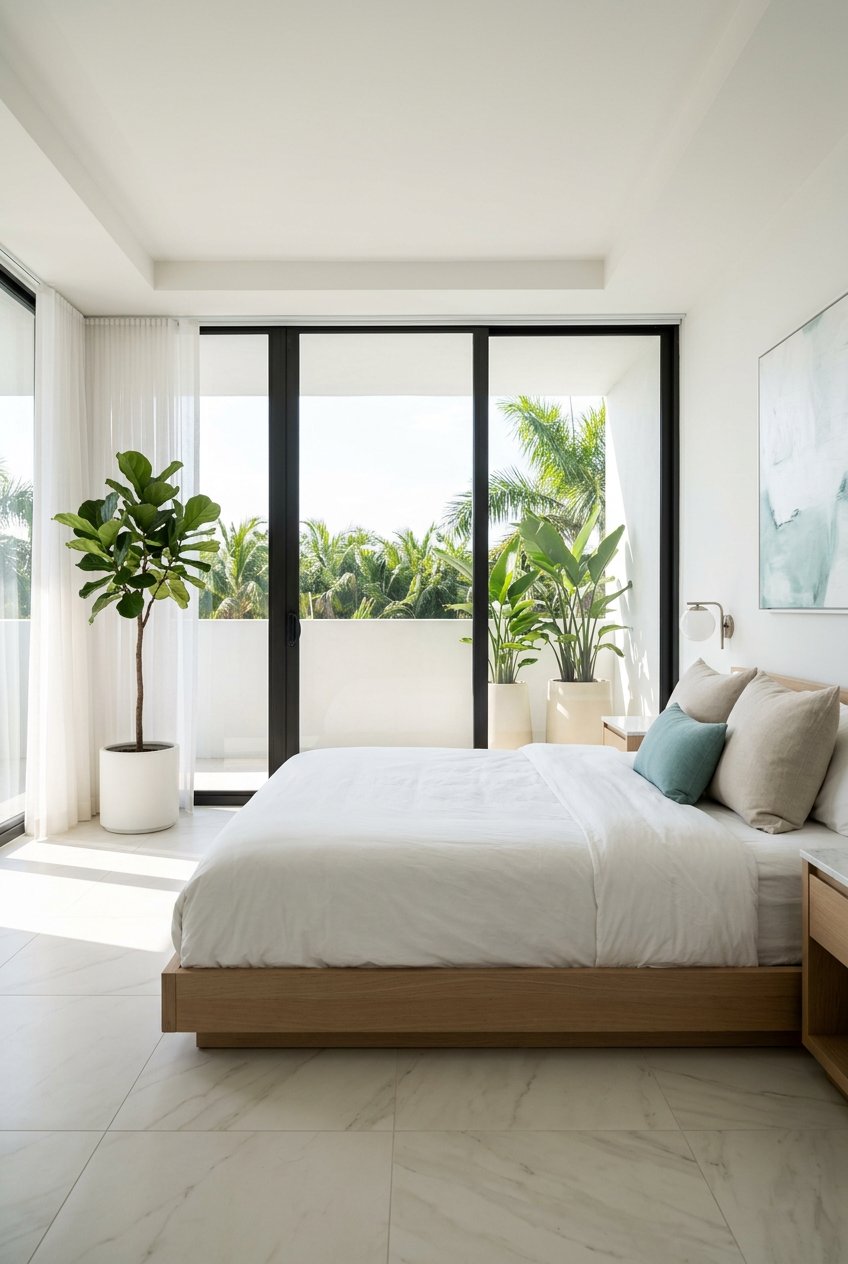
Furnish for comfort and consistency
Guest-ready units win on reviews. Industry guidance recommends hotel-quality mattresses and two sets of linens per bed, plush bath and beach towels, a fully equipped kitchen with cookware and coffee maker, strong Wi-Fi, clear TV and streaming instructions, an iron and hair dryer, and a concise guest manual with house rules and emergency contacts. See a practical host checklist of core provisions in this guide to what Airbnb hosts should provide. In Sunny Isles, consider beach gear like chairs, an umbrella, and a beach cart, plus clear instructions for beach access.
Meet safety and building requirements
Your city application calls for smoke detectors, carbon monoxide detectors, and a fire extinguisher. You will also provide a sketch of emergency exits and your assigned parking. Review the city’s checklist on Sunny Isles Beach’s licensing page. If you need a DBPR license, be prepared to comply with life-safety and sanitation standards. Learn the state’s expectations in DBPR’s vacation rental licensing guidance.
Protect the property and your balance sheet
Sunny Isles requires proof of liability insurance with your city application. Platform coverages are helpful but do not replace an owner-held policy that fits Florida coastal risks. Plan for the right combination of liability and property coverage for a condo unit, and consider flood coverage if applicable. You can verify the building’s flood zone using FEMA’s Map Service Center. Also plan for named-storm deductibles that are often percentage-based.
Choose an operations and management model
Satisfy the city’s local-response rule
The city requires a Responsible Party who is reachable 24-7 and can arrive in person within about an hour to handle complaints or emergencies. Many absentee owners hire a local co-host or full-service manager to meet that standard. Review the city’s Responsible Party requirement on Sunny Isles Beach’s rentals page.
Compare management options and fees
Management models vary by service level:
- Full-service short-term management. Expect about 20 to 30% of gross rental revenue for distribution, dynamic pricing, guest support, cleaning coordination, and on-the-ground response.
- Co-host or hybrid model. Often 10 to 15% if you provide some staff or services directly.
- Long-term property management. Typically lower percentage fees, often 6 to 12%, because turnover and guest services are limited.
Use these benchmarks when estimating net yield and ask for references and performance data. See a sample manager’s service context at Air Concierge.
Set guest standards that protect neighbors
Clear house rules and quiet hours help you avoid complaints. Consider a smart lock with time-bound codes and a visible guest manual on arrival. If you add privacy-safe noise-level monitoring, inform guests in your house rules. Reducing issues upfront lowers enforcement risk.
Know how platform tax collection works
Major platforms may collect and remit some state or county taxes for you, but you are still responsible for registration and correct filings. Always confirm which taxes your platform collects in Miami-Dade and which you must remit directly. Review platform tax policies in Airbnb’s tax collection help article and pair that with Florida’s local option tax guidance.
A practical conversion timeline
- Weeks 0 to 2. Pull condo documents, including rental rules, and ask the association for written confirmation on seasonal use. Start an insurance review and check your flood zone on FEMA’s portal. Shortlist a manager and request a pro forma with building-specific comps.
- Weeks 2 to 6. If your plan pencils out, prepare and submit the Sunny Isles city license packet. In parallel, register with the Florida Department of Revenue and Miami-Dade for transient taxes. If your rental pattern triggers DBPR, initiate the state process and note any inspection needs. Assemble proof of liability insurance and your condo consent letter or bylaws.
- Weeks 6 to 10. Furnish to guest-ready standards, install required safety devices, set up a smart lock, and finalize cleaning and linen services. Confirm the Responsible Party’s contact details and one-hour response plan. Load your listing only after all licenses and registrations are in place.
- Ongoing. Renew licenses, file taxes on time, and maintain association compliance. Keep clear guest and income records and respond quickly to any city notices.
Is Sunny Isles right for your plan?
Sunny Isles Beach offers a strong seasonal profile and global visitor appeal, especially in winter. Success comes from matching your building’s rules with city and state licensing, setting realistic income goals using local comps, and running operations that respect neighbors and protect your asset. With the right preparation, your condo can serve as both an income producer and a personal beach escape.
Ready to map your unit’s potential and build a turnkey plan that fits your goals and travel schedule? Schedule a private consultation with Urdapilleta Real Estate. Our team advises local and international owners on licensing, pricing, furnishing, and full-service management across Sunny Isles and Miami’s luxury corridors.
FAQs
What licenses do I need to rent my Sunny Isles condo seasonally?
- You will need a City of Sunny Isles Beach Short-Term Vacation Rental License, and a Florida DBPR vacation rental license if your rental pattern meets the state’s threshold. You must also register for state and county transient taxes.
How much tax should I budget for short stays in Miami-Dade?
- A typical combined burden is about 13% for short-term stays in much of Miami-Dade, which includes state sales tax, a local surtax, and county transient taxes. Confirm registrations and platform remittances before you list.
What occupancy and rates can I expect in peak season?
- Vendor dashboards commonly show winter peaks with average occupancy in the 60 to 73% range and ADRs around 180 to 260 dollars. Actuals vary by building, view, and finish, so request current comps before modeling.
Do I need a local contact for guest issues?
- Yes. The city requires a Responsible Party who is reachable 24-7 and can respond in person within about an hour. Many absentee owners hire a local manager or co-host to meet this rule.
What safety items are required inside the condo?
- Expect to install smoke detectors, carbon monoxide detectors, and a fire extinguisher, and to provide a sketch of emergency exits and assigned parking as part of your city application.
What should I include in a guest-ready setup?
- Provide hotel-quality beds and linens, two sets of sheets per bed, bath and beach towels, full kitchen basics, strong Wi-Fi, clear TV instructions, an iron and hair dryer, basic toiletries, and a concise house manual.